Overview of studying in Italy
Italy is a top destination for higher education, attracting thousands of international students each year. If you’re considering studying in Italy, one of the first steps you might need to take is obtaining an Italian study visa.
This comprehensive guide will walk you through what you need to know, from eligibility criteria to the application process.
We invite you to take a look at our overview Do You Need a Visa for Italy? Schengen Rules, Exemptions & the 90/180 Day Rule, since not everyone needs a visa to study in Italy — EU citizens, for example, do not need one. Start from there if you are not sure whether you are exempt, or are not familiar with how visas are regulated in Italy. [Link to “Visa or Non Visa”]
The types of study visa in Italy
Visa for Short-Term Study (Type C): for non-EU citizens planning a study period of less than 90 days. After arriving in Italy with this type of visa, you might need to file a declaration of presence in order to legally stay for the short duration of your studies.
Visa for Long-Term Study (Type D): for study periods exceeding 90 days. Unlike the Type C visa, after arriving in Italy with this type of visa you must apply for a residence permit within eight days of arrival.
This guide covers both types of visas.
Eligibility criteria
A short- or long-term study visa is granted to students belonging to the following categories:
- Minors aged 14 and above participating in cultural exchange programs or initiatives.
- Foreign scholars invited to engage in high-level research or cultural activities not covered by other visa categories.
- Adults who qualify for student visas pursuing vocational training courses, subject to annual quota limitations.
- Individuals over 18 years of age seeking enrollment in upper secondary education or advanced technical training programs.
- Foreigners invited to contribute to government-sponsored cooperation and assistance projects, as outlined in specific Italian laws.
- Adult learners planning to undertake advanced studies that align with their previous educational background.
- Qualified adults aiming to complete internships within the established annual quota. These cases require special authorization from regional authorities.
These requirements are based on current Italian immigration regulations. Prospective students should be aware that specific visa conditions may vary depending on their individual circumstances and the nature of their intended studies in Italy.
Where to apply
Like any visa, you need to apply at the Italian Embassy or Consulate in your country of residence.
Italy study visa requirements
To successfully apply, the following documents are needed:
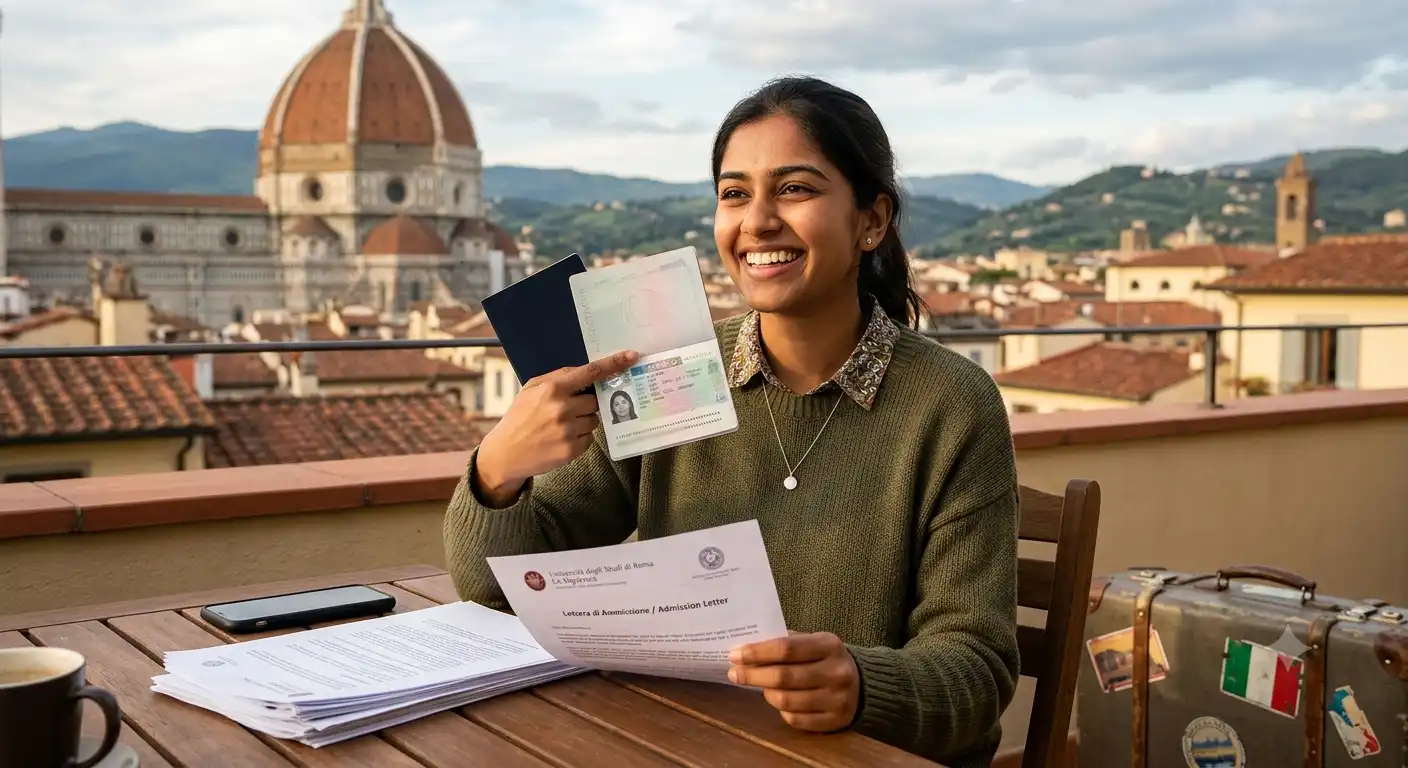
- Acceptance letter from the institution: a formal acceptance or admission letter issued by the Italian school, university, or course provider.
- Proof of your enrollment or pre-enrollment confirmation for your chosen Italian course.
- Financial means: you must demonstrate your ability to support yourself during your stay. The minimum amount is specified in Table A of the Interior Ministry’s Directive (dated March 1, 2000):
| Class duration | One participant | Two or more participants |
| 1 to 5 days | € 269.60 (overall fixed fee) | € 212.81 (overall fixed fee) |
| 6 to 10 days | € 44.93 (daily fee per person) | € 26.33 (daily fee per person) |
| 11 to 20 days | € 51.64 fixed fee + € 36.67 daily fee per person | € 25.82 fixed fee + € 22.21 daily fee per person |
| Over 20 days | € 206.58 fixed fee + € 27.89 daily fee per person | € 118.79 fixed fee + € 17.04 daily fee per person |
Source: Table A, Interior Ministry Directive of March 1, 2000, as reported by the Portuguese Ministry of Foreign Affairs consular network.
- Accommodation arrangements: this could be either a hotel booking or a hospitality declaration from your Italian host.
- Health coverage: unless your home country has a healthcare agreement with Italy, appropriate medical insurance must be proven.
- Passport: the document must remain valid for at least three months beyond your requested visa duration.
- Visa application form: generally downloadable from the competent Consulate.
- Photograph: passport-sized.
The cost of an Italian study visa
The cost ranges between approximately €80 for the short-term (Schengen) study visa to €120 for the long-term visa.
If your stay exceeds 90 days, you must also consider the cost of the residence permit:
- €70.46 for a residence permit lasting 3 months to 1 year
- €80.46 for a residence permit lasting 1 to 2 years
Applicants should also factor in administrative costs (stamp duties, postal kit, and issuance costs).
Language proficiency requirements
Do I need to speak Italian to apply for the study visa?
In general, you do not need to speak Italian to apply for a student visa in Italy. If you are enrolling in a program taught in Italian, however, the educational institution may require proof of your Italian language proficiency.
Can I study in Italy without IELTS?
Yes, it is possible, as several universities offer programs in English without requiring this specific language test. Many educational institutions accept alternative proof of proficiency, and some may conduct their own language assessments during the application process. Prospective students should reach out to their chosen institutions for detailed information about acceptable language qualifications.
How long does it take to get an Italian study visa
The processing time for an Italian study visa can take up to 90 days, so early submission is advisable.
How long can you stay in Italy with a study visa
The duration of your stay matches the length of your course.
Can I work with an Italian study visa
The right to work does not derive directly from the visa itself, but from the residence permit (permesso di soggiorno per studio) that must be requested within 8 days of arrival in Italy, using the yellow postal kit (kit giallo) available at any post office.
Once you hold a valid permesso di soggiorno per studio, you can work a maximum of 20 hours per week. Overall, there is a limit of 1,040 working hours within any 52-week period.
Can I convert my Italian study residence permit into a work permit?
Yes. Legislative Decree No. 20/2023 (the so-called “Decreto Cutro”) reformed the procedure for converting a permesso di soggiorno per studio into a work-based permit. Before this reform, holders of a study permit had to wait for the annual decreto flussi — the decree setting entry quotas for non-EU workers — before they could apply for conversion. Under the current rules, it is now possible to convert a study permit into either an employed or self-employed work permit at any time during the year, without being tied to the decreto flussi window.
Can I bring my spouse and/or family with me
Yes. Italy’s family reunification visa program allows relatives of foreign nationals to join their loved ones legally in the country. Read our related article on family reunification in italy.