
Navigating the Italian real estate market can feel like entering a completely different universe, especially for American, British, and international buyers used to common law systems. Misconceptions about visas, hidden fees, and legal liabilities often turn a dream investment into a bureaucratic headache.
To clear the air, here are the 20 most common questions answered directly by an Italian lawyer, providing clear and up-to-date legal guidance for your property journey,
1. Can a US citizen buy a house in Italy?
Yes, absolutely. United States citizens can legally buy, own, and sell residential or commercial property in Italy. There are no citizenship restrictions or special requirements for foreign investment from the US due to a long-standing reciprocal agreement between the two nations. You do not need a visa, residency, or special permits just to purchase and own real estate.
2. Can you buy property in Italy without being a resident?
Yes. You can purchase and own property in Italy as a non-resident. However, your residency status heavily impacts your taxation. If you do not register your official residency at the local town hall (Comune) within 18 months of closing, the property is legally classified as a “second home” (seconda casa), which carries higher transaction and annual taxes.
3. Can non-EU Citizens buy property in Italy in 2026?
Yes, non-EU citizens can buy real estate in 2026, but the legal framework depends strictly on their country of origin. While US, UK, Canadian, and Australian citizens face no restrictions due to international reciprocity treaties, citizens from other non-EU countries must either hold a valid Italian residence permit (Permesso di Soggiorno) or fall under specific bilateral agreements.
4. Can Indian citizens buy real estate in Italy?
Yes, Indian citizens can buy property in Italy, but their process is subject to specific status checks under the reciprocity principle. An Indian citizen can legally purchase property if they hold a valid Italian residence permit (Permesso di Soggiorno) or if they live abroad and a verified bilateral agreement is active between Italy and India at the time of purchase. It is vital to have an attorney check the Ministry of Foreign Affairs (Maeci) reciprocity list before transferring funds.
5. Can British citizens buy property in Italy after brexit?
Yes. Despite the UK leaving the European Union, British citizens can still buy real estate in Italy exactly like EU citizens, as the UK-Italy reciprocity agreement remains fully intact. However, Brexit fundamentally changed the residency rules: UK citizens can now only spend up to 90 days out of every 180 days in the Schengen zone without a visa. If you wish to stay longer in your Italian home, you must apply for a Long-Stay Visa.
6. Is it safe to buy a house in Italy?
The short answer is yes, but only if you bypass the standard local process. In Italy, real estate agents (agenzie immobiliari) are legally neutral mediators. They represent both the buyer and the seller, meaning they do not owe exclusive fiduciary duty to you. To ensure your investment is 100% safe, it is advisable to ire an independent legal advisor to perform a full due diligence (checking for hidden mortgages, building abuse, and structural compliance) before signing any binding contract.
Read also Do You Need a Lawyer to Buy a House in Italy
7. What are the biggest pitfalls when buying property in Italy?
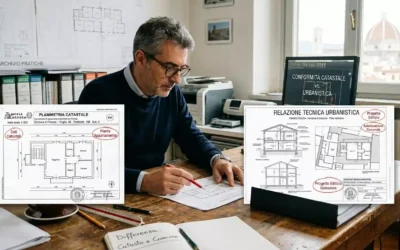
The most dangerous pitfall is structural or planning non-compliance(abusi edilizi). In Italy, many old country houses or apartments have had internal walls moved, windows added, or extensions built without proper municipal permits. If you buy a property with illegal alterations, you legally inherit the liability, fines, and the potential obligation to demolish the changes. An independent legal due diligencecoupled with a technical report from a surveyor (geometra) is mandatory to avoid this nightmare.
Read also Buying Property in Italy: 10 Pitfalls to Be Aware Of
8. Can you buy a house in Italy and get residency automatically?
This is the biggest misconception among international buyers. Buying a house in Italy does not automatically grant you a visa, green card, or residency.Unlike other European nations, Italy does not offer a turnkey “Real Estate Golden Visa.” If your goal is to live in Italy full-time, purchasing a property is just the first step; you will still need to apply separately for an Elective Residency Visa(Residenza Elettiva) or an Investor Visa at your local Italian consulate.
9. Can you get Italian citizenship by buying property?
No. Italy does not grant citizenship or a direct passport through property ownership. Buying a villa or an apartment gives you a property title, but it does not bypass immigration laws. To get Italian citizenship, you must go through the traditional legal routes: ancestry (Jure Sanguinis), marriage to an Italian citizen, or continuous legal residency and taxation in Italy for at least 10 years (for non-EU citizens).
Planning to buy a property in Italy? Don’t risk your investment. Italian real estate law requires independent verification to protect the buyer. Contact our legal team today for a comprehensive legal due diligence report and secure your dream home with total peace of mind. Book a Legal Consultation
10. Can you buy a house in Italy without citizenship?
Yes. Citizenship is never a prerequisite for property ownership in Italy. As long as your home country shares a reciprocity agreement with Italy (like the US, UK, Canada, etc.), you have the exact same property rights as an Italian citizen. You can hold the property deed in your name indefinitely.
11. What are the non-resident property taxes in Italy for 2026?
If your property is classified as a “second home” (seconda casa), it triggers specific tax rules:
- Registration Tax (Imposta di Registro): It increases from 2% (for primary residents) to 9% of the cadastral value.
- Annual Property Tax (IMU):Non-residents must pay this annual municipal tax, from which primary residents are usually exempt.
- Waste Tax (TARI): This is paid annually based on the size of the property, regardless of residency or actual usage.
12. How do I safely pay for a property in Italy from abroad?
You should never wire money directly to the seller’s personal bank account before closing. The safest legal method is utilizing the Notary’s dedicated escrow account(deposito prezzo). Under Italian law, you transfer the purchase balance to the Notary’s regulated escrow account. The Notary only releases the funds to the seller after the final deed (Rogito) is signed and successfully registered in the public land registry.
13. Do I need an Italian bank account to buy property?
Strictly speaking, no, but practically, it makes the process infinitely easier. While you can theoretically transfer funds directly to the notary’s escrow account from a US or foreign bank, paying ongoing utility bills, local property taxes (IMU), and maintenance costs after the purchase will require an Italian or European bank account. Setting one up early in the process is highly recommended.
14. What is a Codice Fiscale and why is it mandatory?
The Codice Fiscale is the Italian equivalent of a Social Security Number for tax purposes. You cannot sign a purchase offer, open a bank account, or set up utilities without it. Fortunately, you don’t need to be in Italy to get one; you can apply for it for free through the Italian Consulate in your home country, or have your legal representative handle it via a power of attorney.
15. Do I need to speak Italian to complete the purchase?
No, but the law protects you if you don’t. By Italian law, if a buyer does not speak Italian, the final deed (Rogito) must be translated into English by an official translator, and a bilingual witness or attorney must be present at the signing. Alternatively, you can sign a Power of Attorney(Procura Speciale) to your Italian lawyer, who can sign the deed on your behalf, saving you a flight to Italy.
16. How long does the buying process take in Italy?
On average, the process takes between 3 to 6 monthsfrom the moment your offer is accepted to the final signing before the notary. The timeline depends heavily on the complexity of the due diligence(e.g., waiting for municipal archives to verify old building permits) and whether the property has historical constraints (Vincolo Belle Arti), which grants the Italian government a 60-day right of first refusal.
17. Can a foreigner buy land in Italy?
Yes, foreigners can buy land in Italy, whether it is agricultural (terreno agricolo) or buildable (terreno edificabile). However, buying land involves stricter legal checks than buying a standard apartment. You must verify the municipal urban plan (Piano Regolatore) to see what can be built, check for environmental constraints, and ensure that local neighboring farmers do not exercise their legal right of first refusal(prelazione agraria).
18. What are the rules for buying an apartment in Italy as a non-resident?
When you buy an apartment in a condominium (condominio), you acquire exclusive ownership of the unit and a proportional share of the common areas. As a non-resident, you must factor in the ongoing monthly condominium fees (spese condominiali). Before closing, your attorney must obtain a formal declaration from the building administrator certifying that the seller has no outstanding debts.
19. Who pays the condominium fees After the property transfer?
Legally, the buyer is jointly liable with the seller for any unpaid condominium fees relating to the current financial year and the immediate previous year. Additionally, you must clearly distinguish between ordinary maintenance (paid by you moving forward) and extraordinary reserve funds (spese straordinarie) voted before the sale, which usually remain the legal responsibility of the seller.
Read also Condominium Arrears in Italy: What Buyers Need to Know Before Purchasing Property
20. What legal framework governs Italian real estate laws?
Italian real estate transactions are strictly regulated by the Civil Code and require the mandatory intervention of a Public Notary (Notaio), who acts as an officer of the State. Unlike common law systems where Title Companies handle the closing, in Italy, the Notary certifies the legal transfer of the title, collects transaction taxes on behalf of the government, and registers the deed. However, the notary does not protect the buyer’s private financial interests—that is the job of your independent legal counsel.