
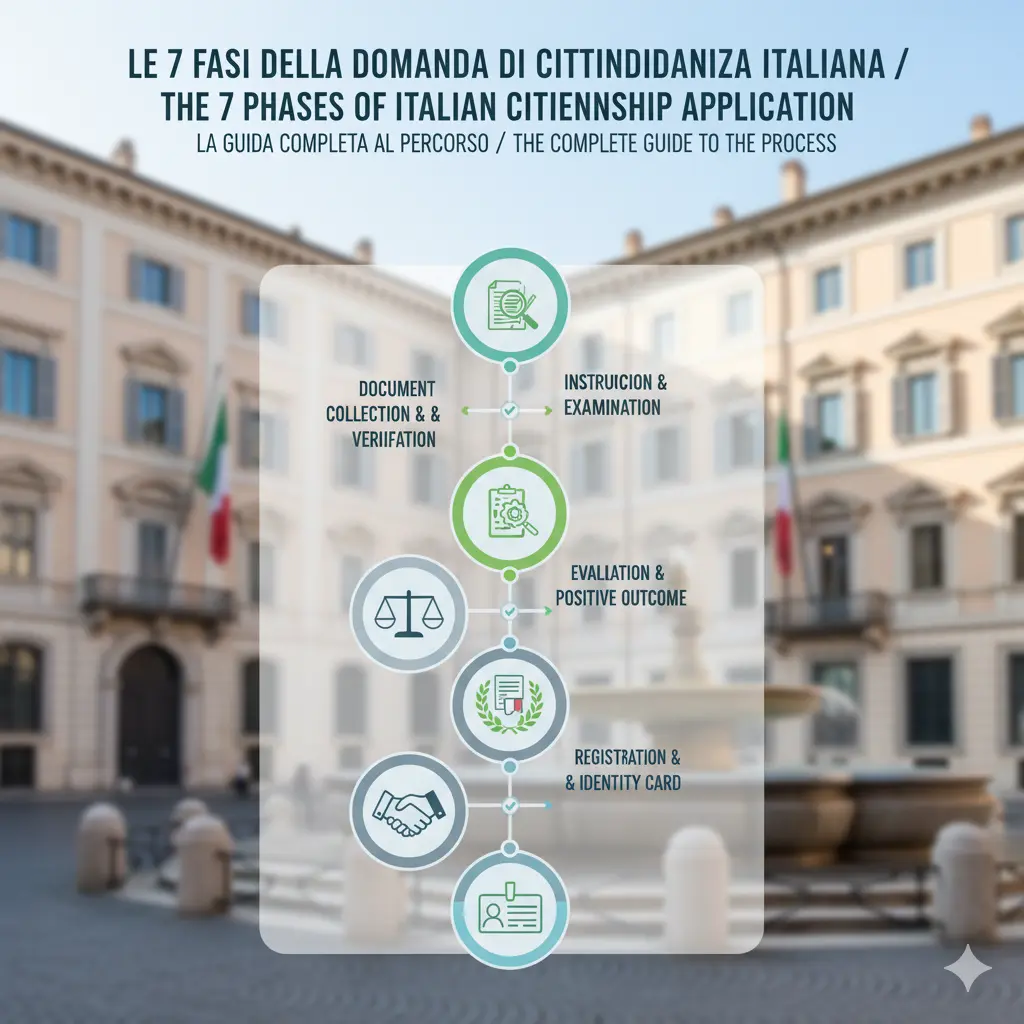
This guide on the 7 processing stages applies exclusively to applications for Italian citizenship by residence (naturalization) or marriage. Please note that it does not apply to citizenship by descent (jure sanguinis).
Introduction
When applying for Italian citizenship by residency or by marriage, the Ministry of the Interior provides applicants with an online portal where, under the section “Check your application”, you can follow the progress of your case. Each step is linked to a specific phrase that corresponds to a different stage of the procedure.
To check the status of your Italian citizenship application, you must log in at https://portaleservizi.dlci.interno.it using your SPID credentials and the code K10 or K10/C assigned to you by the Prefettura when you successfully applied
But first, let us clarify one important point: the stages displayed on the portal should not be considered entirely reliable. While the system is meant to update automatically, in practice this happens rarely. Very often, the status shown online does not reflect the real progress of the application. Accessing the official records may reveal discrepancies.
This is why monitoring the case carefully and, when necessary, submitting reminders (solleciti) is crucial to ensure the procedure does not remain stagnant.
Phase 1 and 2: Initial Verifications (Unified)
“Sono in corso verifiche istruttorie ed elementi acquisiti relativi a chiarimenti e integrazioni con altri uffici coinvolti nel procedimento.” (Preliminary institutional checks and verifications between the involved offices—Prefecture and Questura—are underway).
The process begins with the collection of documents, usually assisted by a professional, and continues into the first two phases, which are considered unified. At this stage, the authorities conduct investigations and verifications with different offices.
This initial phase is notorious for its length. It can last several months or even years, with applicants often obliged to send reminders to the administration in order to stimulate progress. Delays are common due to the workload at the prefetturaand the questura.
Patience is necessary here, but legal assistance of an immigration lawyer can make a real difference in preventing the case from getting lost in bureaucratic inertia.
Phase 3: Acquisition of investigative elements
“Sono stati acquisiti elementi istruttori e cognitivi oggetto di necessari accertamenti utili alla definizione del procedimento.” (Investigative and cognitive elements subject to necessary checks useful for defining the procedure have been acquired).”
In this stage, the authorities gather all the necessary records and documents required to process the application. A case that is managed correctly from the start, thanks to professional guidance, tends to reach this stage much faste
Phase 4: Evaluation of the application
“Sono stati acquisiti tutti gli elementi informativi necessari, la pratica è in fase di valutazione. Iniziano le valutazioni e i pareri necessari rilasciati dai vari uffici.” (All necessary information elements have been acquired; the case is currently under evaluation. The required assessments and opinions issued by the various offices are beginning).
At this point, the application formally enters the core evaluation phase, and the various involved departments begin issuing their opinions. This is one of the most delicate stages because the future of your application depends on the analysis of all information gathered previously.
The department responsible for national security must verify that the applicant does not pose a risk to public safety or national security. The presence of a criminal record or law enforcement reports against the applicant will almost certainly result in an adverse opinion, leading to the rejection of the citizenship application.
Phase 5: Conclusion of evaluations
“La procedura relativa alla pratica in questione è conclusa ed il relativo provvedimento è stato inviato agli organi competenti per i conseguenti adempimenti e determinazioni.” (The procedure regarding the case in question is concluded, and the relevant provision has been sent to the competent bodies for the resulting duties and determinations).
This stage marks the conclusion of the investigative phase, signaling that all involved offices have completed their checks and forwarded their opinions to the final decision-making authorities.
Important Note: This status does not guarantee a positive outcome. The final decision could still be a rejection if even a single unfavorable opinion was expressed by the consulted entities.
- How long does Phase 5 take? The law does not set a specific deadline for individual stages. On average, Stage 5 lasts about 2 to 3 months.
Phase 6: Favorable outcome and decree
“L’istruttoria si è conclusa favorevolmente, è in corso la trasmissione del provvedimento di concessione alla prefettura che ne curerà la notifica; Se risiede all’estero il decreto sarà inviato all’Autorità Consolare.” (The investigation has concluded favorably; the transmission of the granting provision to the Prefecture—which will handle the notification—is underway. If you reside abroad, the decree will be sent to the Consular Authority).
This status means your application has been officially approved! The decree of citizenship is signed and transmitted. If you reside in Italy, the Prefecture will handle the notification; if you live abroad, it will be communicated via the competent Consulate
Phase 7: Final communication and oath
Stage 7 is the final step: the official granting of Italian citizenship. The competent Prefecture notifies the applicant of the decree. A message will appear on your online portal indicating the appointment date to collect the signed decree at the Prefecture.
- How long does Stage 7 take? Generally, handling the notification process takes 4 to 5 months.
Once you collect the decree, you must contact your local Town Hall (Comune) to schedule your Oath of Allegiance. This oath represents the absolute final step and must be taken within 6 months of the notification date. If you fail to do so, the citizenship decree expires and loses all validity.
Article 10 of Law 91/92 states that:
“The decree granting citizenship has no effect if the person concerned does not take, within six months of the notification of the decree itself, the oath to be faithful to the Republic and to observe the Constitution and the laws of the State.”
For your appointment at the Town Hall, you must bring your valid ID, your original birth certificate, and the official citizenship decree.
The offices involved in the Italian citizenship application
Throughout the procedure, different offices are involved depending on the phase:
- Phases 1 and 2: only the prefettura and the questura.
- From Phase 3 onward: the Ministry of the Interior (Ministero dell’Interno).
- For applications abroad: the consular authority also plays a role.
For this reason, relying solely on the portal’s updates is risky. Accessing the official records and verifying the real progress of the case is always advisable.
Why professional support matters
Access to documents and careful legal monitoring are crucial in the citizenship process. A professional can ensure the application is properly followed, delays are addressed, and reminders are submitted when necessary.
Without such support, many cases risk remaining at the same stage for years, creating unnecessary frustration. With expert assistance, applicants can safeguard their rights and significantly improve the chances of moving their case forward efficiently.
FAQ – Italian Citizenship Processing Phases
K10 Citizenship Code: How do you get it?
The K10 code is the unique tracking file number of your application. It is assigned when the Prefecture accepts and protocols your application on the Ministry of the Interior’s portal. You will receive an automated email notification (if you provided one during the application) informing you of new messages on the portal, which you can access using your SPID.
What does “Pratica Definita” mean?
It means that the Public Administration has reached a final decision on your application (either approval or rejection) and the process on the portal is officially closed. If you see this status but have not received any official communication, contact our law firm to verify the outcom
What are the actual waiting times for Italian citizenship?
For applications submitted after December 20, 2020: The legal deadline is 24 months, which can be extended by the administration up to a maximum of 36 months.
For applications submitted before that date: The applicable deadline was 36 months, extendable up to 48 months.