
If you are an American considering buying property in Italy, you will quickly notice that something feels off. The process does not work the way you expect. The professionals involved do not play the roles you are used to. And the documents you are asked to sign carry consequences that would surprise most US buyers.
This is not because the Italian system is broken. It is because it is built on fundamentally different principles — and understanding those differences before you sign anything is what protects your investment.
There is no one working exclusively for you
In the United States, a real estate transaction involves two separate agents: a listing agent representing the seller, and a buyer’s agent representing you — with a legal fiduciary duty to act in your interest alone.
In Italy, this does not exist.
The Italian real estate agent (agente immobiliare) acts as a mediator (mediatore) between buyer and seller simultaneously. They collect a commission from both parties — typically 3–5% from each. Their legal obligation is to facilitate the transaction, not to protect your interests specifically.
This is not a criticism of Italian agents. It is simply how the system is structured, and it is important to understand it before you walk into your first viewing. The agent who shows you the property, negotiates on your behalf, and drafts the purchase offer is also working for the seller. Their primary incentive is to close the deal.
The notary is not your closing attorney
American buyers often assume the Notary (Notaio) plays a role similar to a closing attorney or title officer — someone at the table whose job is to make sure the transaction is safe for you.
The Notary is a neutral public official appointed by the State. Their role is to authenticate the deed, verify its formal legal validity, and manage tax payments on behalf of both parties. They will not review contract terms from your perspective, flag clauses that disadvantage you, or advise you on risk.
Neutrality is not protection.
The geometra is not a lawyer
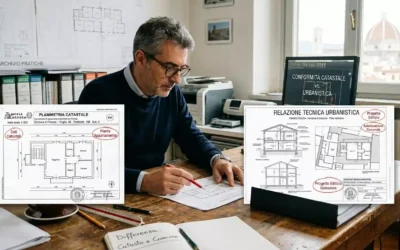
Many foreign buyers — Americans included — appoint a geometra (licensed surveyor) to check the property before signing. This is sensible. A geometra can verify the technical condition of the property, identify structural issues, and check whether the physical layout matches the cadastral records.
What a geometra cannot do is assess the legal implications of what they find.
Cadastral and urban planning discrepancies (difformità catastali e urbanistiche) are not uncommon in Italy, particularly in older properties. But not all discrepancies are equal. Some are minor and easily regularised. Some fall within legal tolerance thresholds. Others are serious building violations (abusi edilizi) that affect the property’s marketability, its ability to be mortgaged, and its value at resale — and cannot be remedied after purchase.
Distinguishing between these cases requires legal analysis, not technical inspection alone. A geometra identifies the discrepancy. A lawyer tells you what it means for your purchase.
Your US bank transfer will not work at closing
In the United States, wiring funds from your bank account to a title company or escrow is standard practice. In Italy, this does not work at the rogito (final deed signing).
Italian law requires that payment be made simultaneously with the deed and be legally irrevocable at that moment. An international wire transfer from a US bank does not meet this requirement.
Your options are:
- Open an Italian bank account and issue a certified bank check (assegno circolare) on the day of signing or execute a non-revocable domestic wire transfer through an Italian bank on the day of the deed
- Use the Notary’s escrow account (deposito prezzo), where your funds are held securely and released to the seller only after the deed is registered — without requiring an Italian bank account
For most American buyers, the deposito prezzo is the most practical solution and offers an additional layer of protection: if anything prevents the deed from being registered after signing, your funds are not yet in the seller’s hands.
What this means in practice
The Italian property market offers genuine opportunities for American buyers. But the absence of a buyer’s agent, the neutral role of the Notary, the technical limits of a geometra’s report, and the practical constraints around fund transfers mean that you are navigating the transaction without the protections you are used to at home.
An independent, bilingual property lawyer is the professional who fills that gap — reviewing every document before you sign, conducting full legal due diligence on the property, inserting protective clauses into the purchase proposal, and ensuring your funds are transferred safely.
Before you proceed, we recommend reading our full guide to Legal pitfalls when buying property in Italy and our guide to the Italian property purchase process
If you would like to discuss your specific situation, contact us for an initial consultation.